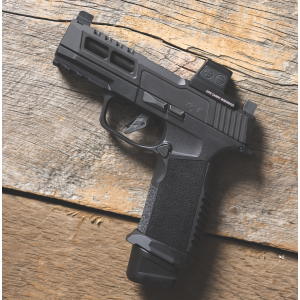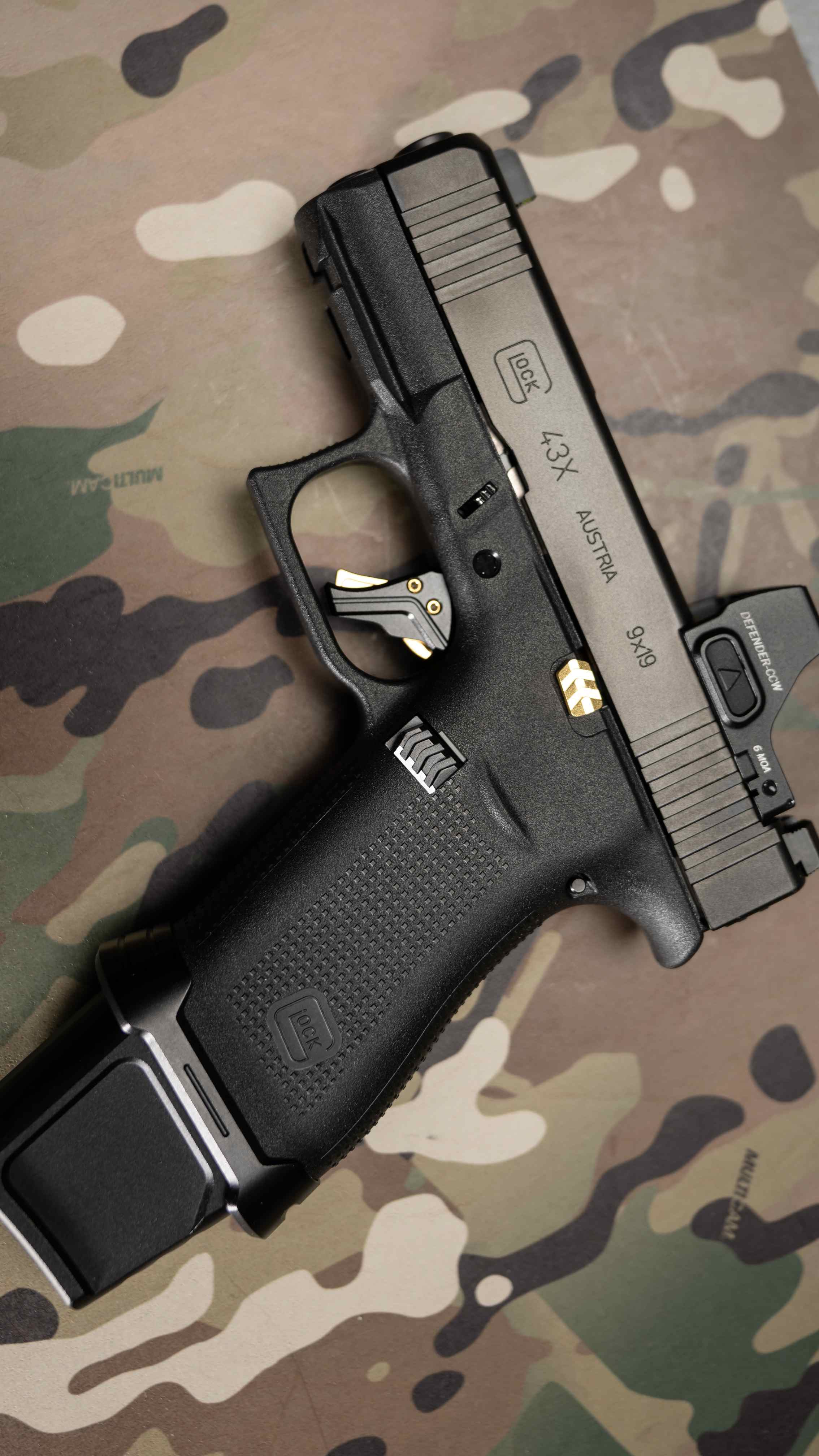
Adding a compensator changes muzzle behavior, recoil timing, and - importantly - how your pistol’s point of impact shifts relative to your iron sights and micro-red dot. Choosing the correct sight height requires understanding how comp gas vectoring affects barrel attitude, how dot height over bore interacts with the new recoil path, and how much co-witness information you actually need for carry or competition. This guide breaks down the engineering behind compensated sight alignment and gives you a practical test plan to dial in the correct height.
How a compensator changes your sight system
A compensator vents gas upward and outward. This reduces muzzle rise but also alters the barrel’s dwell angle while the slide cycles. Even small changes in how the muzzle returns to battery can affect where the irons “line up” relative to the dot.
-
Reduced muzzle rise: Less upward travel means the barrel returns flatter - sights may appear to sit “lower” relative to POI.
-
Gas-induced downward force: Some comps push the muzzle slightly downward, especially with high-pressure ammo. This can raise POI if sights remain unchanged.
-
Slide velocity change: Slower or faster slide speeds alter how consistently the dot tracks and where the irons land during recoil.
Micro-red dot height over bore (HOB) matters
Micro-dots sit at different heights depending on optic cut depth and plate thickness. Higher HOB means:
– Less need for tall iron sights to co-witness
– Greater mechanical offset at close distances
– More visible dot movement with recoil
Lower HOB (deep optic cuts) generally improves consistency with comped pistols because the dot tracks more “in line” with the new recoil vector. But low-profile dots may require taller irons depending on comp height and slide geometry.
Selecting proper iron sight height for a comped pistol
Compensated pistols usually benefit from slightly taller irons than non-comped versions - not always full suppressor height, but high enough to give you a clean reference when the dot temporarily leaves the window.
Common height ranges
-
Flush to +0.050” over OEM: Works for mild micro-comps and minimal gas influence.
-
+0.100”–0.150” (“mid-height” irons): Best for most compensated carry pistols - easy co-witness without cluttering the dot window.
-
+0.200”+ (“suppressor height”): Only needed for extremely tall comps, enclosed-emitter dots, or those who prefer full iron-through-the-window visibility.
Co-witness choices: what actually matters
For comped setups, aim for a lower 1/5 or lower 1/3 co-witness. That keeps the dot unobstructed while still giving you a clear mechanical backup reference if the dot flickers during recoil or occlusion.
-
Lower 1/5: Most popular for compensated pistols; irons stay low enough not to clog the window.
-
Lower 1/3: More visible under stress; preferred if you shoot high-pressure ammo or run aggressive comps.
-
Absolute co-witness: Rarely ideal; clutters the optic window and slows indexing for red-dot-focused shooters.
Ammo pressure affects your required sight height
Compensators behave differently with different ammunition:
-
+P or hotter loads: More gas = stronger muzzle counterforce → POI may rise.
-
Standard pressure: Moderate gas → POI remains close to non-comped baseline.
-
Low-powered range ammo: Less gas → comp underperforms → muzzle rise may increase → POI lowers.
Your sight height must work across all loads you commonly carry. Always tune for carry ammo, not cheap range loads.
Testing protocol to confirm your sight height
-
Zero your red dot at 15 or 25 yards (your preference for carry or competition).
-
Shoot a 5-round slow group using irons only (dot off or covered).
-
Document vertical difference between POA and POI.
-
Repeat with different ammo types - at least your carry load and one practice load.
-
If POI consistently sits high: Increase front sight height by 0.020–0.040”.
-
If POI consistently sits low: Shorten front sight by 0.020–0.040”.
-
Re-test at 10, 15, and 25 yards until iron POI aligns with dot zero.
Did you know?
Even a 0.040” change in front sight height can shift POI by 2–4 inches at 25 yards on a comped pistol - far more than on a non-comped gun. That’s because gas vectoring amplifies small mechanical sight changes.
Conclusion - choose height based on comp behavior, not guesswork
Comped pistols don’t follow the same sight rules as standard setups. Gas direction, dot height over bore, ammo pressure, and holster fit all influence where your irons land. Start with mid-height irons, select a co-witness that preserves dot clarity, then validate using structured POI tests. When tuned correctly, a comped pistol with a micro-red dot gives flatter recoil, faster sight recovery, and irons that serve as a reliable, unobtrusive reference point.
To explore precision-machined sighting components and upgrades for your setup, visit our SIG and Glock upgrade collections: Handgun upgrades.
FAQs
1. Do comped pistols always need taller sights?
Not always, but most benefit from mid-height irons since compensators alter barrel return and POI more than non-comped setups.
2. Should I zero irons or the red dot first?
Zero the red dot first. Then adjust iron height to align with the dot-verified POI.
3. Does a deeper optic cut reduce required sight height?
Yes. Lowering the dot reduces HOB offset and typically lowers the iron height needed to co-witness.
4. Will switching ammo change sight height needs?
Yes. High-pressure ammo increases compensator effect and can raise POI. Always tune for your carry ammunition.
5. How do I estimate how much sight height change I need?
A rough rule: every 0.010” of front sight height changes POI by ~1 inch at 25 yards on most comped carry pistols.